

Sobre el cliente
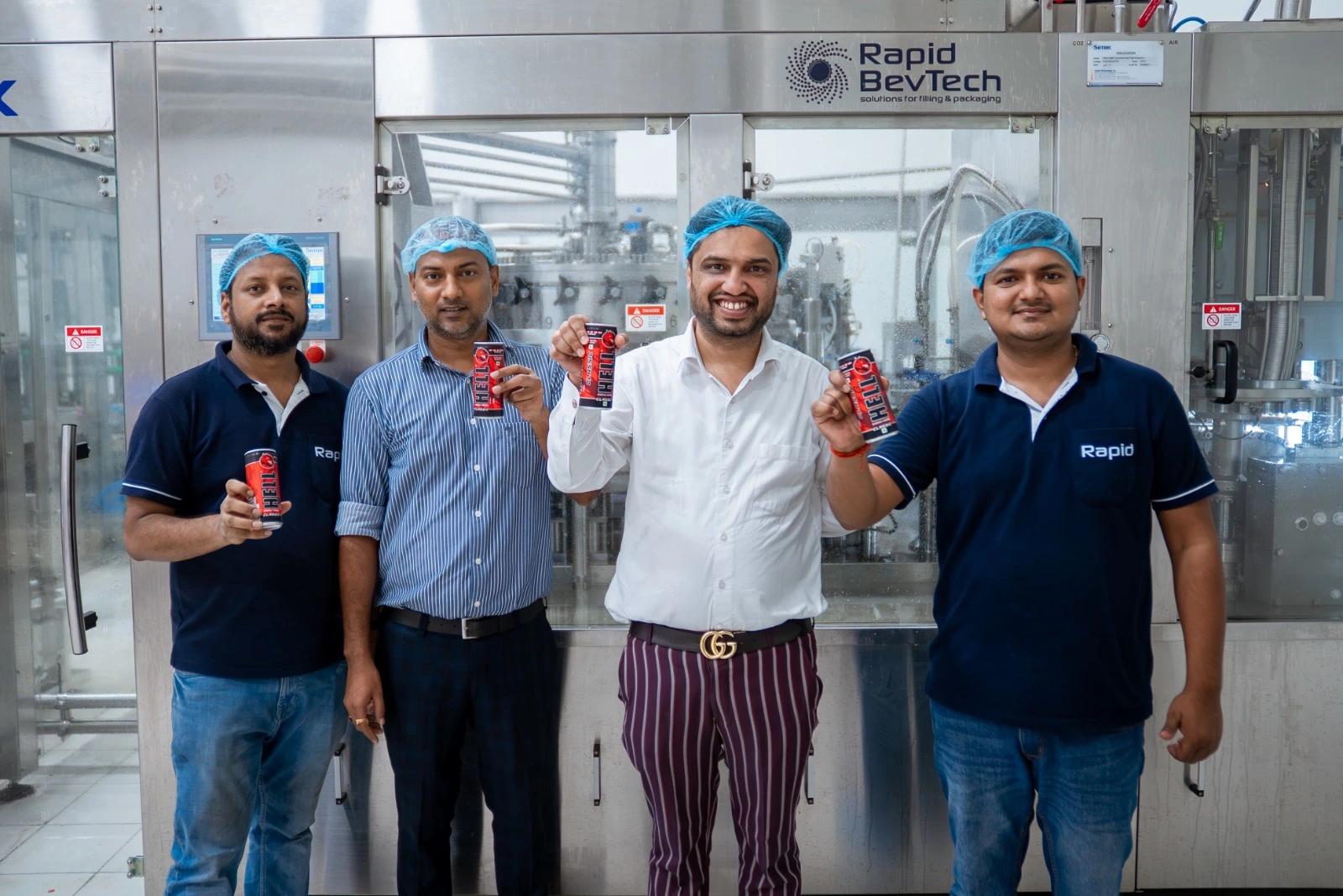
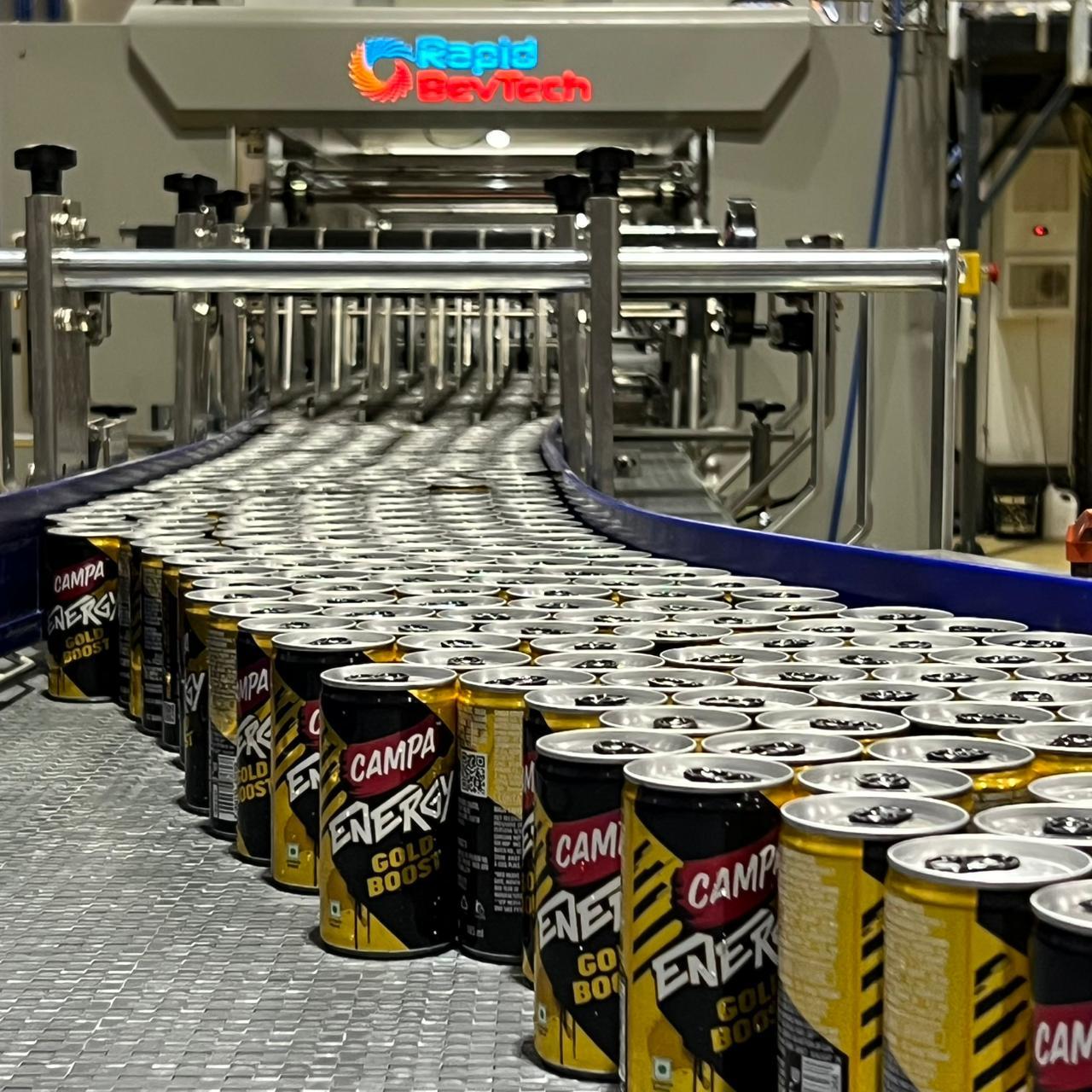
CAMPA, the fastest-growing beverage brand from Reliance Consumer Products, has invested in an end-to-end canning line from Rapid BevTech. The line, with a capacity of 26,000 cans per hour (CPH), was successfully installed and commissioned in the shortest possible time.
El proveedor
Rapid BevTech entrega líneas de llenado y envasado de bebidas llave en mano, desde los sistemas de proceso hasta el final de línea: ingeniería, fabricación y puesta en marcha propias en su planta de unos 4 100 m² (44 000 pies cuadrados) en Ahmedabad, India, con servicio posventa las 24 horas.
- Máquinas entregadas
- 800+
- Países
- 10+
- Líneas completas llave en mano
- 40+
- Integrantes del equipo
- 150+
Máquinas entregadas
Países
Líneas completas llave en mano
Integrantes del equipo
El desafío
The canning line was ordered in August 2025 for BD Foods unit in Varanasi. The requirement was to supply, install, and commission the complete line before the peak volume season of 2026.
Nuestro enfoque
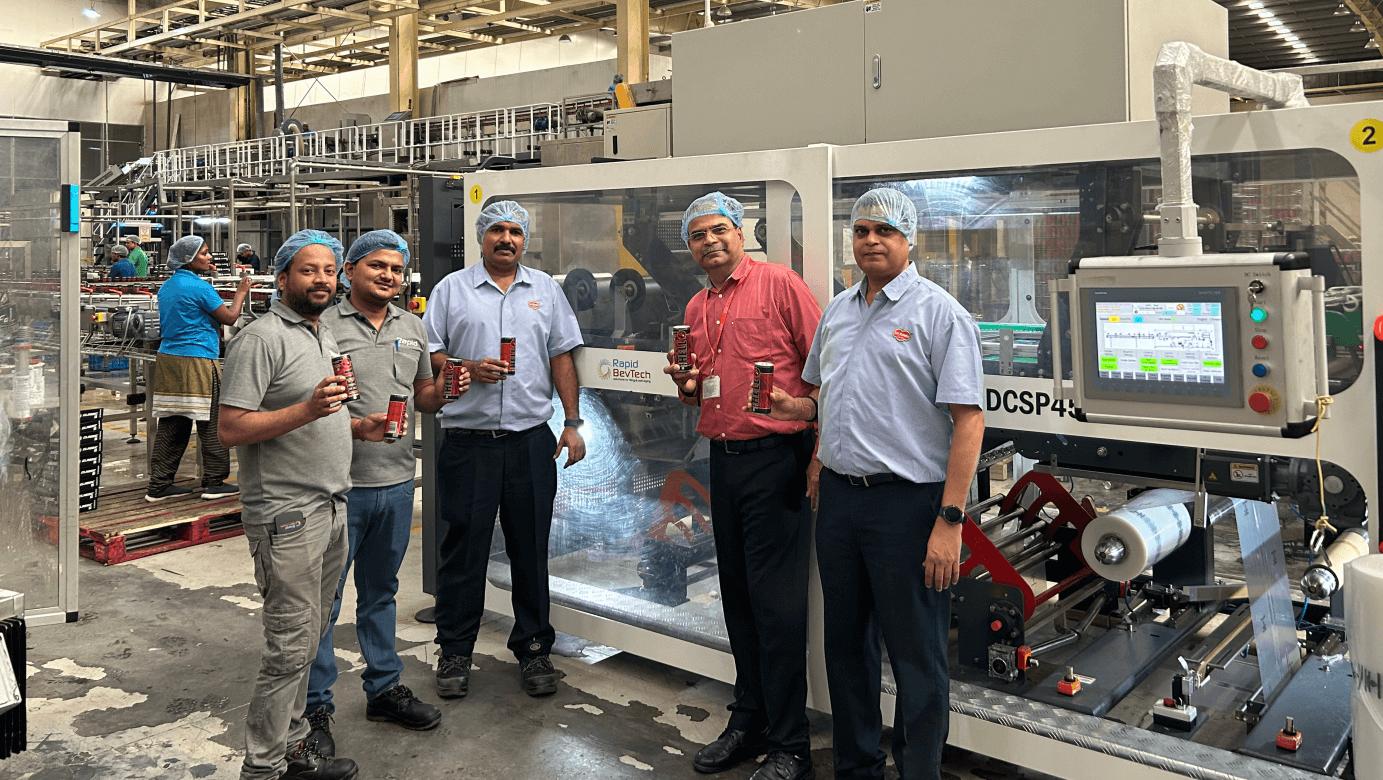
The line was supplied on schedule and installed in 22 working days, with commissioning completed in under a week. With a vertical startup, the line achieved more than 90% efficiency within the first week of production.
Line Process
De-palletising and Empty Can Inspection: Empty can pallets are loaded on the high-level RAPID-Depal, which automatically separates interlayer sheets and stacks empty pallets, accumulating pallets and interlayer sheets into their respective magazines. Empty cans move in a single-row conveyor through the Empty Can Inspection (ECI) system. Dual cameras check for can defects and automatically reject defective cans or cans with foreign particles into a bin.
Rinsing and Filling: Inspected cans pass through the gravity-fed RAPIDrinse water rinsing system before entering the filler, with residual water content below 0.8 ml. The volumetric filling system fills the carbonated product with a fill-level accuracy of ±1.1 ml, with fill-level rejections below 0.02%.
Seaming is performed by a Version 3 seamer from SIMIK, Taiwan, within standard quality parameters. The filler is enclosed in a Class 10,000 clean room, pressurized with HEPA-filtered air, and fitted with an automatic COP (Clean Out of Place) system for cleaning the filler exterior and the enclosure.
Inspection and Coding: Filled cans are checked by an X-ray-based inspection system for fill-level variation within ±3 ml. Cans then pass through a tunnel warmer, which raises product temperature above ambient to prevent condensation. High-pressure air blowers with adjustable nozzles clear water droplets from both sides of the can before inkjet coding.
An online high-speed photographic inspection system checks for the presence of coding and softly rejects any can without coding onto the reject table, without causing damage.
Final Packing and Palletising: Inspected cans are packed into trays with shrink film in a 6×4 pack formation. Other pack formations are also possible, with or without trays, or with shrink film only. A robotic palletiser arranges the packed units according to a defined palletising matrix. The matrix can be changed for different pack sizes and formations through a program change, with up to 99 pallet matrix recipes available. The palletiser has a compact footprint and is designed for user-friendly operation.